2026 Best Powder Apple Cider Vinegar Suppliers

Choosing the 2026 best Powder Apple Cider Vinegar suppliers requires more than comparing prices. A bright label and low cost can hide weak testing, inconsistent acidity, or excessive carrier ingredients. This guide examines suppliers through practical quality signals, including apple source, fermentation records, spray-drying methods, acetic acid content, solubility, and batch traceability.

Details matter. A reliable supplier should provide recent certificates of analysis, microbial results, heavy-metal testing, allergen statements, and clear storage guidance. GMP certification can strengthen confidence, but it should not replace independent verification. Buyers should also check whether the powder contains maltodextrin, silicon dioxide, or other processing aids. These materials may be acceptable for some applications, yet they can affect formulation goals.

Dr. Carol S. Johnston, a leading vinegar researcher, has cautioned, “Vinegar is not a magic bullet.” Her reminder is important here. Powdered apple cider vinegar is a functional ingredient, not a guaranteed solution for health or performance. Our evaluation therefore focuses on evidence, documentation, manufacturing experience, and honest communication. Some supplier information may remain incomplete, and that deserves attention rather than polished assumptions. Small gaps in testing can become large problems during commercial production.

The following overview compares notable suppliers for supplement brands, beverage developers, food manufacturers, and private-label buyers. It considers quality control, customization, minimum order quantities, technical support, and delivery reliability. The strongest supplier is not always the largest. It is the one that can explain its process clearly, support its claims, and deliver consistent powder from batch to batch.

2026 Best Powder Apple Cider Vinegar Suppliers

What Is Powdered Apple Cider Vinegar and How Is It Made?

What Is Powdered Apple Cider Vinegar and How Is It Made?

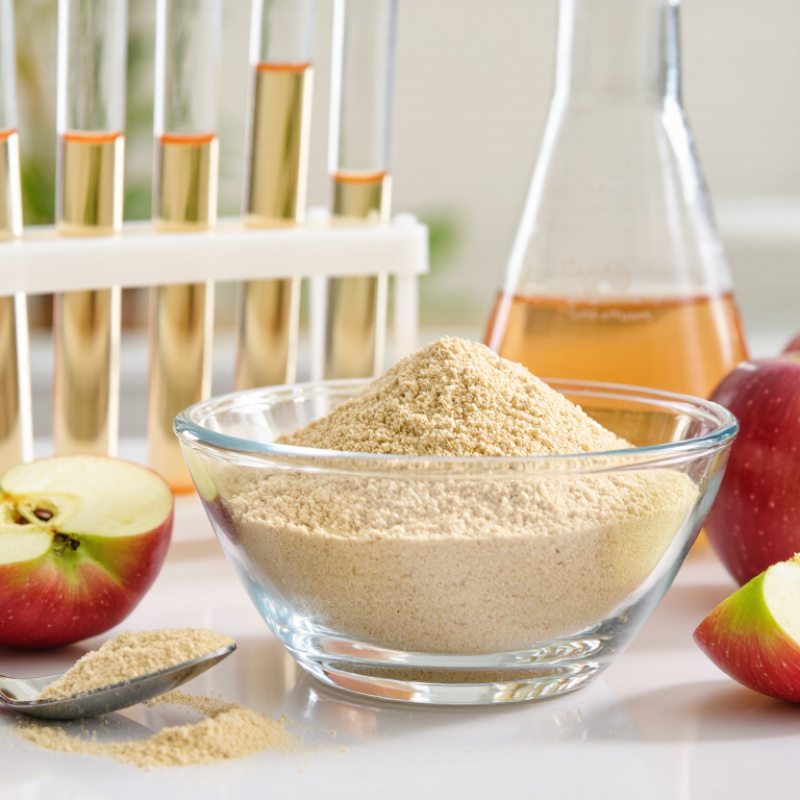
Powdered apple cider vinegar is dehydrated vinegar, not ground dried apples. Producers first crush apples and ferment the juice with yeast. The alcohol then becomes acetic acid through controlled bacterial fermentation. The liquid is filtered, concentrated, and dried into a free-flowing powder. Spray drying is common because it supports consistent production and lower moisture.

Manufacturers usually blend vinegar with a food-grade carrier, such as starch or fiber. This improves flow, protects acidity, and reduces clumping during storage. Some processes use freeze drying to preserve more delicate compounds, but costs are higher. The chemistry matters. Powdered vinegar may not retain every component found in liquid vinegar, especially “mother” solids.

A 2024 Grand View Research analysis estimated the global apple cider vinegar market at about US$1.2 billion in 2023. It also projected growth of roughly 7% annually through 2030. Future Market Insights similarly identifies convenience formats as an important demand factor. These figures cover the wider vinegar market, not powder alone, so they require careful interpretation.

Reliable suppliers should disclose acetic acid concentration, moisture content, carrier materials, and batch testing. Independent checks should cover microbiological safety, heavy metals, pesticides, and contaminants. One limitation remains. Powder can absorb humidity quickly. Packaging, water activity, and storage conditions therefore influence quality. I would not judge a powder by appearance alone. A clean label is useful, but laboratory evidence matters more.

Key Factors for Evaluating Powder Apple Cider Vinegar Suppliers

2026 Best Powder Apple Cider Vinegar Suppliers

Key Factors for Evaluating Powder Apple Cider Vinegar Suppliers

Market growth attracts inconsistent powders. Grand View Research valued the global apple cider vinegar market at about USD 1.1 billion in 2023. Its forecast indicates roughly 8% annual growth through 2030. The Council for Responsible Nutrition reported that 75% of U.S. adults used dietary supplements in 2024. Demand is strong, but quality still varies. Request recent batch records, not attractive brochures.

A reliable supplier should state acetic acid content clearly. “Vinegar equivalent” is not the same measurement. Ask for assay results, moisture, ash, microbial counts, heavy metals, pesticides, and carrier percentage. Results should come from ISO/IEC 17025-accredited laboratories. Test the powder after reconstitution, too. That reveals acidity and sediment more honestly. It is a small but useful check.

Traceability matters. Confirm apple origin, fermentation controls, drying method, allergen handling, packaging, and storage temperature. Review both accelerated and real-time stability data. The powder should remain free-flowing, with no sharp fermented odor or visible caking. I would not treat one polished certificate as proof of consistency. Supplier audits can miss seasonal variation. A 500-gram pilot sample may expose problems that paperwork hides. Cadmium results especially deserve careful review.

Top Powder Apple Cider Vinegar Suppliers to Consider in 2026

Choosing powder apple cider vinegar suppliers in 2026 requires more than comparing prices. Reliable suppliers should provide clear specifications for acidity, moisture, carrier materials, and powder solubility. Ask for a recent certificate of analysis, not a generic template. Independent laboratory testing adds confidence.

Experienced suppliers usually explain their drying process, batch controls, and storage conditions. Look for traceable lot numbers and documented allergen controls. Production sites following recognized quality systems can reduce avoidable risks. A practical test helps too: mix the powder in room-temperature water and observe clumping, sediment, and flavor consistency.

Small details matter.

Suppliers serving food, beverage, and supplement manufacturers should offer stable documentation and responsive technical support. Their team should explain how packaging protects the powder from humidity during transport. Samples from several batches can reveal differences hidden by one attractive sample. Some suppliers may provide excellent paperwork but weak communication, which can delay production.

No checklist is flawless. A supplier’s claims still require verification. I would review testing frequency, recall procedures, and change-notification policies before signing an agreement. It is also worth checking whether the quoted price includes testing, custom packing, and minimum order requirements. The best options are not always the cheapest; they are the suppliers that combine consistent powder quality, honest limitations, and evidence-based support.

2026 Best Powder Apple Cider Vinegar Suppliers - Top Powder Apple Cider Vinegar Suppliers to Consider in 2026
Priority Supplier Profile Recommended Product Format Typical Acetic Acid Specification Key Documentation to Request Quality and Compliance Indicators Best Fit for Buyers Important Verification Point
1 Food-grade powder processor Spray-dried apple cider vinegar powder with a food-grade carrier Declared on the certificate of analysis; the value should be expressed as acetic acid percentage or equivalent acidity Certificate of Analysis Specification sheet Allergen statement Manufactured under a recognized food-safety system; batch traceability and microbial testing available Food, beverage, seasoning, and supplement manufacturers Confirm whether the stated acidity refers to the powder itself or the original liquid vinegar
2 Organic-certified powder supplier Organic Apple Cider Vinegar Powder produced from certified organic vinegar Acidity and concentration must be supported by batch-specific test results Organic certificate COA Traceability record Valid organic certification covering the product, facility, and relevant processing steps Organic supplements, clean-label foods, and natural product lines Check certificate validity, scope, issuing body, and whether the carrier is also permitted for organic products
3 Private-label formulation supplier Finished powder blends in sachets, capsules, tubs, or custom formulas Must be defined in the finished-product specification rather than inferred from marketing claims Finished-product COA Label proof Stability data Clear serving-size declaration, controlled formulation records, and documented release testing Companies launching consumer-ready products Verify that all nutrition, structure/function, and ingredient claims comply with the target market’s rules
4 Bulk ingredient distributor Standardized powder supplied in commercial bags or lined cartons Lot-specific acidity, moisture, and identity results should be available before shipment COA SDS Country of origin Consistent lot coding, sealed packaging, documented storage conditions, and reliable inventory control Manufacturers needing flexible purchasing and repeat replenishment Ask whether the distributor holds stock or arranges production after order placement
5 Capsule and tablet ingredient supplier Fine, low-moisture powder suitable for encapsulation or compression Particle size, flowability, bulk density, and moisture should be included in the technical specification Particle-size data Moisture result Heavy-metal test Good flow characteristics, controlled moisture, and compatibility with the selected dosage form Capsule, tablet, and powdered supplement manufacturers Request a production sample and evaluate filling performance before approving the ingredient
6 Natural-food and beverage ingredient supplier Flavor-compatible powder designed for drink mixes, gummies, bars, or seasoning systems Acidity, pH after reconstitution, flavor profile, and solubility should be defined Sensory profile Solubility data Microbiology report Stable color and flavor, controlled microbial counts, and suitable packaging for hygroscopic powders Functional beverages, snacks, gummies, and powdered drink mixes Test the powder in the final recipe because carrier systems can affect taste, dispersibility, and texture
7 Specialty low-carrier powder supplier Higher-concentration powder formulated with a reduced amount of carrier material Concentration must be confirmed analytically; “high potency” should not replace a numerical specification Composition statement Analytical method Stability report Transparent carrier disclosure, validated testing methods, and clear recommended storage conditions Premium products requiring a shorter ingredient declaration Compare the actual active-acid content per serving, not only the percentage of vinegar powder
8 Export-oriented contract manufacturer Custom powder production with international packaging and documentation support Product specifications should be aligned with the importing country’s food or supplement requirements Export documents Packing list Certificate of origin Auditable quality system, export experience, robust packaging, and documented batch release procedures Importers and brands serving multiple international markets Confirm customs classification, language requirements, shelf-life rules, and destination-country labeling obligations

Buyer guidance: Powder apple cider vinegar products differ in acidity, carrier composition, moisture, particle size, flavor, and intended use. Before placing an order, request a current batch-specific Certificate of Analysis, full ingredient specification, allergen statement, microbiological results, heavy-metal results, shelf-life information, and storage requirements.

Quality Standards, Certifications, and Product Testing

2026 Best Powder Apple Cider Vinegar Suppliers: Quality Standards, Certifications, and Product Testing

Reliable powder apple cider vinegar suppliers should show more than a polished specification sheet. Buyers need clear information about the source vinegar, drying method, carrier materials, and batch identity. A practical quality review begins with a current certificate of analysis, production date, lot number, and storage guidance. Small details matter.

Look for facilities operating under recognized food safety systems, such as HACCP, GMP, or ISO 22000. Certifications should be valid, traceable, and issued by qualified bodies. They should not replace testing. Each batch should be checked for moisture, acidity, microbial safety, heavy metals, pesticide residues, and unwanted contaminants.

Testing should use documented methods and independent laboratories when appropriate. Results should match the actual lot, not a generic sample.

Powder performance also deserves attention. A sample may look fine but disperse poorly in water. Check color, odor, flowability, solubility, and particle consistency. Ask whether the product contains maltodextrin or another carrier, and request its percentage.

I have found that unclear carrier disclosure creates more confusion than technical jargon. That weakness deserves honest review.

Supplier audits, retained samples, and complaint records can reveal quality patterns over time. One test is never enough. Past performance still needs verification.

How to Select the Right Supplier for Your Business Needs

Choosing a powder apple cider vinegar supplier requires more than comparing prices. Grand View Research valued the global apple cider vinegar market at approximately US$1.1 billion in 2023, with continued growth expected. That expansion attracts capable manufacturers and weaker intermediaries. Your evaluation should begin with production evidence, not attractive brochures.

Ask for recent certificates of analysis from multiple batches. Check acetic acid content, moisture, pH, microbial limits, heavy metals, and pesticide residues. A reliable supplier should explain its carrier ingredients, drying process, shelf life, and storage requirements. Request samples in plain packaging. Test them in your own formulation, especially after mixing with water, minerals, or sweeteners. Small differences can affect flow and flavor.

Traceability matters. The supplier should identify the orchard region, processing site, lot number, and recall procedure. Look for HACCP-based controls, GMP compliance, and an ISO 22000-certified food safety system where appropriate. The FDA Food Safety Modernization Act emphasizes preventive controls and documented supply-chain accountability, useful benchmarks for supplier audits. Price still matters, but unusually low pricing deserves questions. I would also review lead times, minimum order quantities, packaging performance, and complaint-response speed. A polished audit can miss practical problems. Recheck performance after three months, because one successful sample proves very little.

2026 Best Powder Apple Cider Vinegar Suppliers: Supplier Selection Priorities

This recommended procurement weighting helps buyers compare powder apple cider vinegar suppliers without relying on brand names. Quality compliance, laboratory testing, and ingredient traceability receive the highest priority, followed by scalability, delivery reliability, commercial terms, and packaging flexibility.

©2024 Home Health Solutions by The Medicine Shoppe
cross linkedin facebook pinterest youtube rss twitter instagram facebook-blank rss-blank linkedin-blank pinterest youtube twitter instagram