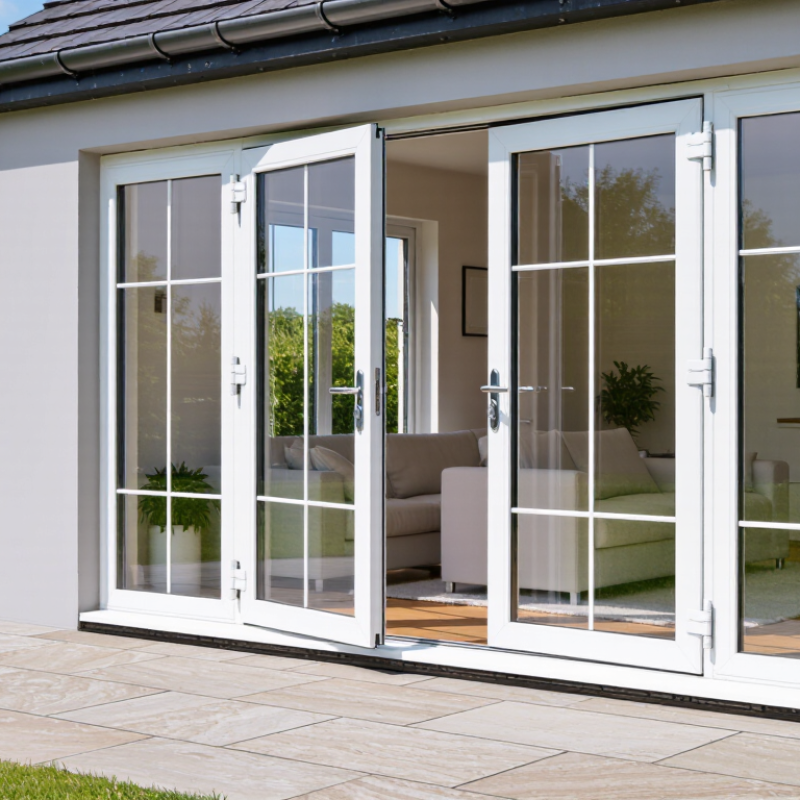
Choosing China Best French Doors Patio Doors Manufacturers is about more than comparing catalog photos. Buyers need to assess frame materials, glazing options, hardware, fabrication tolerances, and documented performance. French Doors Patio Doors can brighten a room and connect it with a garden, but poor sealing may invite drafts, rain, or difficult operation. Small details matter.
Energy data gives this choice useful context. The U.S. Energy Information Administration’s 2020 Residential Energy Consumption Survey reports that space heating accounted for about 42% of household site energy use. That figure covers whole-home energy, not door-related losses. Still, it shows why insulation and air leakage deserve careful attention. Ask manufacturers for product-specific U-factor and solar heat gain coefficient ratings, ideally supported by recognized testing or certification. Request clear specifications for glass, weatherstripping, locks, and installation tolerances. A polished brochure is not proof.
Factories may differ in materials, quality controls, customization, and export experience. Compare written test documents, sample finishes, warranty terms, and packaging plans—not just quoted prices. Check whether the supplier can explain how its doors handle your climate and project dimensions. Good questions reveal a lot. Yet documentation has limits: performance on paper cannot guarantee careful installation or long-term maintenance. That part is easy to overlook. A reliable shortlist balances verified product data with practical communication, consistent manufacturing, and realistic expectations.
French patio doors bring broad glass panels and a balanced look to outdoor openings. Common types include hinged pairs, single hinged doors with sidelights, and sliding French-style units. Hinged models need clear floor space; sliding panels suit compact patios. A small detail matters.
Performance depends on more than appearance. Low-emissivity glazing can reduce heat transfer, while tempered or laminated glass may improve safety where suitable. Multi-point locks, continuous weather seals, and well-fitted thresholds help limit drafts and water entry. Consider climate, door orientation, and maintenance needs before choosing. More glass can brighten a room, but may also increase afternoon glare.
These doors work well between living rooms and patios, dining areas and gardens, or bedrooms and balconies. For busy entrances, check the hinges or sliding tracks and choose a threshold that is easy to cross. In rainy or coastal settings, durable fittings and effective drainage deserve attention. Measure the finished opening, not just the rough frame. Installation quality varies, so confirm how the frame will be anchored, sealed, and adjusted after fitting.
There is no perfect layout.
Chinese manufacturers design French patio doors by balancing sightlines, weather protection, and smooth operation. They begin with opening measurements, then select frame profiles, glazing, hardware, and drainage details. A narrow center meeting rail can preserve a classic look, but it must still close firmly. Small measurement errors matter.
Production typically includes profile cutting, corner assembly, glass installation, sealing, and hardware adjustment. Quality checks should cover diagonal dimensions, gasket compression, water drainage, and repeated opening cycles. The U.S. Department of Energy estimates that heat loss and gain through residential windows account for about 25–30% of home heating and cooling energy use. Its guidance makes glazing and frame performance important design considerations for glazed patio doors, too. NFRC ratings help compare U-factor and solar heat gain coefficient. Real-world installation still matters; a good door can perform poorly if the opening is not sealed well.
Tips: Ask for test data on air leakage, water resistance, and thermal performance. Check that sample doors open smoothly and lock without force. One detail is easy to overlook: site conditions vary, and factory specifications cannot fix every installation mistake.
For buyers comparing China-based French-door patio-door manufacturers, materials should match climate, opening size, and upkeep. Thermally broken aluminum supports slim frames and broad glass. uPVC needs little routine maintenance, while fiberglass offers dimensional stability. Wood-clad frames add warmth but require finish care. No material wins everywhere. Ask for frame-section details, finish samples, and written warranty terms—not just attractive catalog photos.
Hardware deserves equal scrutiny. Wide door leaves put real weight on hinges, rollers, and locking points. Request corrosion-resistant components, adjustable hinges, multipoint locks, and replacement-part availability. Test the handle and threshold on a full-size sample if possible. Smooth today, still smooth later? Installation and maintenance matter, too.
Energy performance is measurable, not simply “insulated.” The U.S. Department of Energy’s Energy Saver guidance links windows to 25–30% of home heating and cooling energy use through heat gain and loss. Compare whole-unit U-factor and solar heat-gain coefficient (SHGC), using National Fenestration Rating Council labels where available. Lower U-factor generally limits heat transfer; SHGC should suit local sun exposure. Options include double or triple glazing, low-emissivity coatings, warm-edge spacers, and tight weather seals. Customization can cover opening direction, frame color, grille pattern, privacy glass, and screens. More glass layers are not automatically better; weight, hardware capacity, daylight, and climate all count.
| Category | Common Options or Specifications | Practical Considerations |
|---|---|---|
| Frame materials | Vinyl (uPVC), thermally broken aluminum, fiberglass, wood, and aluminum-clad wood | Vinyl and fiberglass generally require little maintenance. Thermally broken aluminum can support slim sightlines; wood needs more upkeep, while cladding protects its exterior face. |
| Door configuration | Two-panel center-hinged, three- or four-panel, inswing, outswing, or fixed-panel combinations | Confirm the handing, available clearance, threshold height, and whether the opening will accommodate the selected panel layout. |
| Glazing | Double- or triple-glazed insulated glass units; low-emissivity coatings; argon or krypton gas fills; laminated or tempered safety glass where specified | Glass selection affects heat transfer, solar gain, daylight, and safety. Tempered or laminated glazing may be required in particular locations by applicable codes. |
| Energy performance | Compare whole-unit U-factor and solar heat gain coefficient (SHGC); ask for results certified or labeled by a recognized fenestration rating program | Lower U-factor indicates less heat transfer; SHGC describes solar heat admitted. Appropriate targets depend on climate, orientation, and local energy requirements. Check the exact size and configuration. |
| Weather sealing and threshold | Compression seals, adjustable multipoint locking, sill pan compatibility, and standard or low-profile thresholds | Air and water performance depends on the complete assembly and correct installation, not only the frame. Match the threshold and drainage details to the site conditions. |
| Hardware | Hinges, multipoint locks, handles, cylinders, flush bolts, and optional keyed operation | Confirm hardware compatibility with door handing, panel weight, security requirements, and exposure to coastal or humid conditions. Corrosion-resistant finishes can be useful in harsh environments. |
| Customization | Made-to-order width and height, frame color, interior and exterior finishes, grille patterns, glass tint, decorative glass, and hardware finish | Available choices vary by construction and opening size. Request written confirmation of dimensions, finish, glazing, handing, and approved drawings before production. |
| Quality and project checks | Product data sheets, performance labels, test reports, installation instructions, warranty terms, and pre-shipment inspection records | Verify that documentation covers the ordered product and configuration. Confirm applicable building-code requirements, packaging, delivery terms, and installation responsibilities. |

Note: Specifications and performance vary by product, dimensions, glazing, and installation. Request project-specific documentation and verify local code requirements before ordering.
When evaluating French patio door manufacturers in China, look beyond showroom finish and quoted price. Request test reports for the exact door configuration, including frame material, glass build-up, hardware, and dimensions. ASTM E283 measures air leakage; ASTM E331 tests water penetration under controlled pressure. Ask for the laboratory name, test date, specimen size, and pressure used.
Details matter. A report for a similar-looking model may not represent the door you will receive.
Check whether the manufacturer can explain U-factor, solar heat gain, and weather-seal choices for your project’s climate. The U.S. Department of Energy’s Energy Saver guidance estimates that heat gain and loss through windows account for 25–30% of residential heating and cooling energy use. This figure concerns windows in U.S. homes, not guaranteed savings from a patio door, but it shows why glazing deserves scrutiny.
Ask for glass specifications and confirm how the door drains water at the sill. Inspect a working sample: operate the panels, examine corner joints, and check that locks engage without force. A polished sample is useful, yet it cannot reveal every production variation. Request quality-control records and clear packaging details before approving an order.
China Best French Doors Patio Doors Manufacturers
Quality Control, Certifications, and Export Considerations
China’s best French door and patio door manufacturers should prove quality on the production line, not just through polished samples. Ask for documented glass checks, frame measurements, corner-joint inspections, and final air, water, and operating tests. Keep batch records linked to each shipment. Small details matter. A door that works smoothly in a showroom may bind after transit or seasonal movement.
Performance claims need context. The U.S. Department of Energy’s Energy Saver guidance estimates that windows account for 25–30% of residential heating and cooling energy use through heat gain and loss. Request whole-unit U-factor, solar heat gain coefficient, and air-leakage results, then confirm the tested configuration matches your order. ISO 9001 supports consistent quality management; it does not certify a door’s thermal or weather performance. For export, check the destination market’s safety-glazing, wind-load, and energy requirements. These rules differ. Verify each test report’s scope, date, and issuing laboratory, and inspect packaging plans for long-distance transport. A certificate can still leave gaps. Recheck the details before placing a large order.