How to Choose Lightweight Golf Umbrellas in 2026?
Choosing lightweight golf umbrellas in 2026 is not simply a matter of finding the lowest listed weight. A golf course exposes every weakness. Wind catches a shallow canopy, rain leaks through poor seams, and a slippery handle becomes annoying after nine wet holes. The right umbrella must feel light without feeling fragile.
David Kahng, founder of Davek Umbrellas, describes the design goal this way: “An umbrella should protect you without becoming a burden.” That principle fits golf especially well. Lightweight golf umbrellas should combine a broad canopy, flexible fiberglass ribs, a stable shaft, and a grip that remains secure with damp gloves. A strong automatic opening can help, but a complicated mechanism may add weight and fail earlier. Simple is often better.
This guide examines the details buyers may overlook in 2026. We will consider packed length, canopy coverage, wind resistance, fabric density, UV protection, and trolley compatibility. We will also look at warranty terms and replacement policies. Those details reveal how seriously a brand supports its product.
No umbrella wins every test. A larger canopy usually weighs more. A lighter frame may sacrifice some storm stability. That trade-off matters. A golfer walking a hilly course may prefer 700 grams over maximum coverage. Another golfer playing coastal courses may accept extra weight for stronger ribs.
Marketing language can confuse the decision. “Windproof” does not mean indestructible. “Lightweight” does not guarantee comfort. Real performance depends on balance, construction, and repeated use. The best choice is the umbrella that protects consistently, fits your routine, and remains manageable from the first tee to the final green.
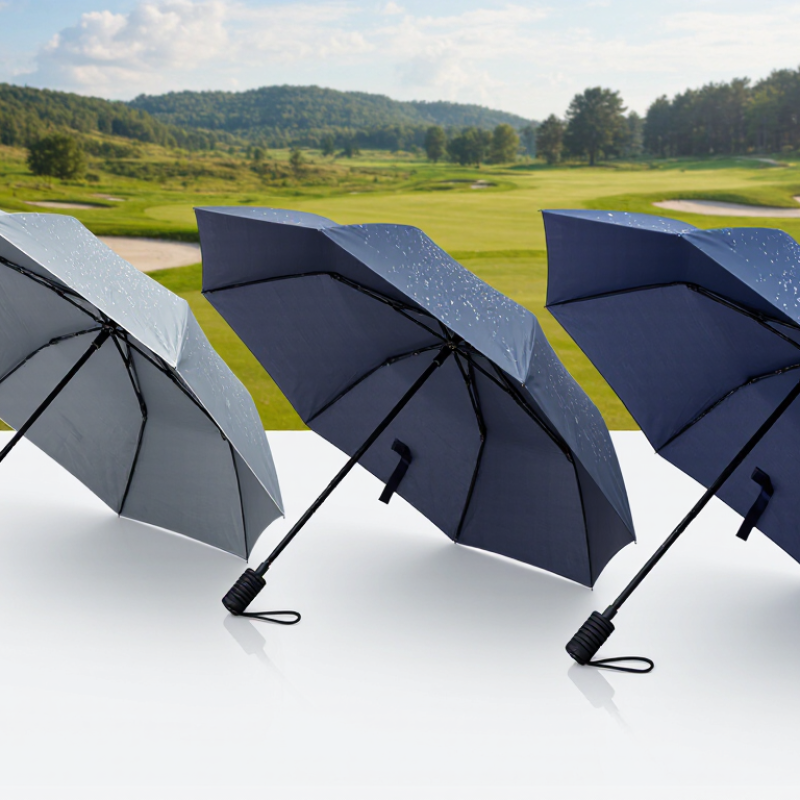
What Makes a Lightweight Golf Umbrella Suitable for 2026?
A suitable lightweight golf umbrella for 2026 must handle more than sudden rain. The World Meteorological Organization reported that 2024 was the warmest year recorded, with global temperatures about 1.55°C above the pre-industrial average. That trend makes heat, glare, and fast weather changes practical design concerns. Choose a canopy with strong UV protection, quick-drying fabric, and enough coverage for your shoulders and golf bag. A 120–130 cm canopy usually offers useful coverage without feeling awkward between shots.
Weight matters, but balance matters more. In my experience, an umbrella under 700 grams feels comfortable during long rounds, provided its shaft does not flex excessively. Look for fiberglass ribs, a textured handle, and a manual opening system with fewer failure points. A vented canopy can release gust pressure, although it may still turn inside out in severe wind. That limitation deserves honesty. No compact umbrella is truly storm-proof.
Tips: Test the umbrella with one hand while wearing a golf glove. Check whether the handle slips when wet. Measure the packed length before placing it in your golf bag. A sleeve with a bright pull tab helps during hurried weather changes. Also, inspect the ribs after several rounds; small bends often appear before complete failure. Industry durability claims can sound impressive, but real course use remains the better test.
How to Compare Weight, Size, and Canopy Coverage
Choosing a lightweight golf umbrella starts with three numbers: weight, size, and canopy coverage. The National Golf Foundation’s 2024 Participation Report recorded 28.1 million U.S. on-course golfers in 2023. More players need practical protection, not oversized equipment.
Weight affects walking comfort and balance. A canopy between 0.6 and 0.9 kilograms usually feels manageable during an 18-hole round. However, a lighter frame may flex more in gusts. Size needs careful reading. Check the open span, not only the closed length. A 60-inch circular span covers about 7.9 square feet before wind, angles, and shared space reduce protection. Larger canopies help two golfers, but they can catch wind and crowd narrow paths. ISO 811:2018 offers a recognized method for testing fabric resistance to water pressure. It does not guarantee comfort or storm performance. That distinction matters.
Tips: Compare the canopy span, shaft length, and packed weight together. Hold the umbrella with one hand for five minutes. It should not pull your shoulder downward. Test the frame’s flexibility gently. Avoid choosing by diameter alone; shape changes usable coverage. I once preferred the largest canopy available, but it felt clumsy beside a golf bag. That was a useful mistake. No specification predicts every course condition. A compact, moderately wide model may serve better than a heavier shelter.
How to Choose Lightweight Golf Umbrellas in 2026? - How to Compare Weight, Size, and Canopy Coverage
| Umbrella Category | Approx. Weight | Closed Length | Open Canopy Diameter | Estimated Canopy Area | Recommended Users | Main Trade-Off |
| Ultra-Compact Single Golfer | 450–550 g | 28–32 cm | 105–115 cm | 0.87–1.04 m² | One golfer carrying a light bag | Smallest coverage and less shoulder protection |
| Standard Compact Golf Umbrella | 550–700 g | 30–35 cm | 115–125 cm | 1.04–1.23 m² | Most solo golfers | Slightly heavier than an everyday travel umbrella |
| Lightweight Full-Size | 650–850 g | 85–95 cm | 125–135 cm | 1.23–1.43 m² | One golfer wanting better rain coverage | Longer when stored and less convenient to transport |
| Wind-Resistant Lightweight | 700–900 g | 85–100 cm | 125–140 cm | 1.23–1.54 m² | Exposed courses and changeable weather | Reinforced frames can increase weight |
| Large Two-Person Golf Umbrella | 850–1,100 g | 90–105 cm | 140–155 cm | 1.54–1.89 m² | Two golfers or a golfer with equipment | Highest coverage but more drag and storage space |
| Sun-and-Rain Golf Umbrella | 650–900 g | 80–100 cm | 125–145 cm | 1.23–1.65 m² | Golfers needing shade as well as rain protection | UV-rated fabric may add weight and cost |
How to compare the figures: Canopy area is estimated from the circular formula π × (diameter ÷ 2)2 and represents the projected coverage area, not the exact fabric surface. Measurements vary with frame design, handle type, fabric, and whether the stated canopy diameter is measured across the ribs or the fabric edge. For most solo golfers, a canopy diameter of 115–135 cm and a total weight below 850 g offers a practical balance between coverage and portability.
What Features and Buying Factors Match Your Golfing Needs?
Choosing a lightweight golf umbrella starts with your course, not its advertised weight. The National Golf Foundation reported 28.1 million U.S. on-course golfers in 2024. More rounds mean more exposure to sudden rain and wind. A compact umbrella suits carts and dry climates. A larger canopy protects your shoulders, clubs, and bag during long walks.
Check the details closely. Aim for a fiberglass shaft and flexible ribs. They usually tolerate gusts better than rigid metal parts. A vented canopy can release pressure, but it may still invert in severe wind. Choose a curved handle if you carry the umbrella for several holes. Also inspect the closed length, grip texture, and opening mechanism. A 60-inch canopy may cover more space, yet it can feel awkward beside another player. Lighter is not automatically better. I still question weight claims when manufacturers exclude the sleeve or strap.
Tips: Match size to your routine. Walkers may prefer 1.5 to 2 pounds, while cart users can accept more coverage. The R&A’s Golf Around the World 2023 report counted about 66.6 million golfers worldwide, showing how varied playing conditions can be. For frequent wet-weather play, examine seam coverage and canopy stitching. No umbrella stays reliable when used as a walking stick. Test the grip with a glove before buying. Small discomfort becomes noticeable after eighteen holes.
How to Choose Lightweight Golf Umbrellas in 2026?
Feature priority scores are based on a practical 10-point buying framework for golfers who want low carry weight without sacrificing coverage, stability, or comfort.
How to use this chart: Start with weight and canopy coverage, then check wind stability, grip comfort, UV protection, and automatic opening according to your local weather and walking habits. A lightweight model is most practical when it remains easy to carry while still covering both you and your golf bag.

