Dishwashing Powder vs Tablets Which Is More Effective?
In the realm of kitchen cleaning, the debate between Dishwashing Powder Vs Tablets has captured attention. Many households face the question of which option truly delivers the best results. Dishwashing powders have long been favored for their versatility and effectiveness with tough stains. However, tablets offer convenience and pre-measured doses that simplify the dishwashing process.
Exploring the effectiveness of these two products invites us to consider their unique strengths and limitations. Powders can be adjusted for different loads, but they risk clumping when exposed to moisture. Tablets, while easy to use, might not dissolve as effectively in all water types. Each choice comes with its nuances that can impact the overall cleaning experience.
Consumers seek reliable solutions, often relying on brand claims and user reviews. Both dishwashing powders and tablets have their advocates. However, the ultimate decision may depend on personal preferences and specific dishwashing challenges. Reflecting on these factors can lead to a more informed choice between Dishwashing Powder vs Tablets.
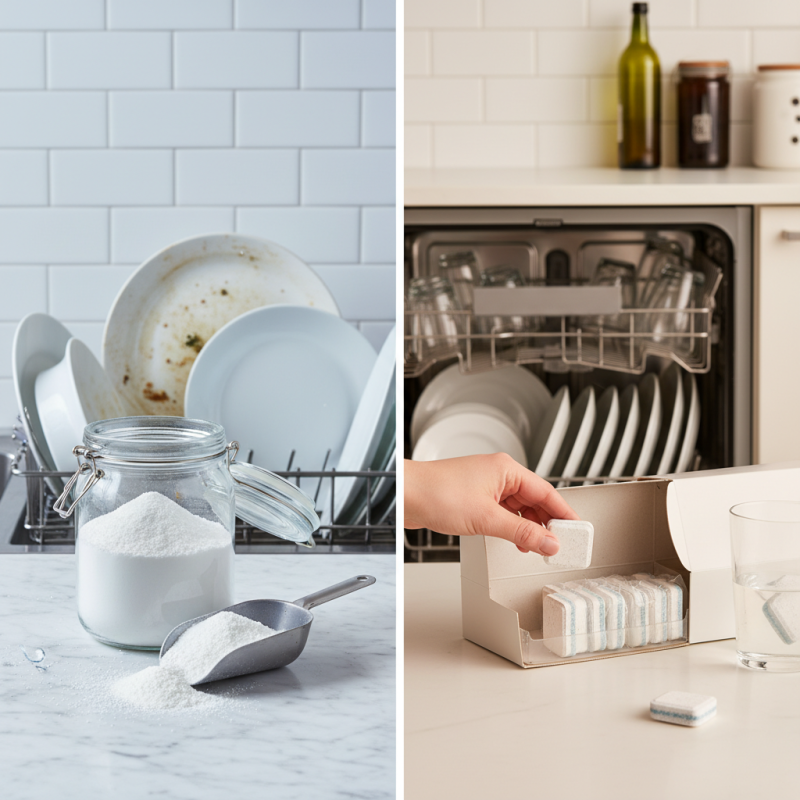
Dishwashing Powder: Composition and Benefits
Dishwashing powder is a popular choice for many households. It usually contains sodium carbonate and enzymes that help break down food particles. This composition is essential for effective cleaning. The enzymes work by targeting specific stains, ensuring thorough removal.
One of the benefits of using powder is its concentration. This makes it easier to adjust the quantity based on dish loads. However, too much powder can leave residues. It's important to measure carefully. Some users find that pouring it directly onto dishes can lead to clumping, which may reduce its effectiveness.
On the other hand, the versatility of dishwashing powder is worth noting. It can be used for various cleaning tasks beyond dishes. For instance, some people use it to clean sinks or stovetops. Still, these alternative uses require caution, as powders can scratch delicate surfaces.
Understanding the composition helps users maximize benefits while being mindful of potential issues.
Dishwashing Tablets: Composition and Advantages
Dishwashing tablets have gained popularity due to their convenience and effectiveness. These small, pre-measured packs typically contain a blend of cleaning agents, enzymes, and rinsing aids. Studies show that the precise dosage can lead to better cleaning performance, as revealed by data from the European Committee of Domestic Equipment Manufacturers. Their findings suggest that pre-measured products reduce waste and improve efficiency in dishwashing efforts.
The composition of dishwashing tablets often includes surfactants, which break down grease and food residues. Enzymes play a critical role too. They target proteins, starches, and fats, enhancing cleaning power. A report by the American Cleaning Institute indicates that enzyme-based products can remove up to 30% more food residues compared to conventional powders. This shows tablets’ strong potential in improving kitchen cleanliness.
Tips: To maximize cleaning efficiency, ensure that your dishwasher’s filter is clean. Dirty filters can hinder water circulation, impacting the performance of both tablets and powders. Additionally, remember that water hardness can affect effectiveness. Using a water softener can help achieve better results with any dishwashing product.
Comparative Analysis of Cleaning Power Between Powder and Tablets
When comparing dishwashing powder and tablets, effectiveness is a key concern. Industry reports suggest that both forms have distinct advantages. Powder often provides a more dynamic cleaning power due to its granular nature. It can dissolve quickly and adapt based on water temperature and soil levels. According to a study by the International Journal of Food Science, powdered detergents can increase stain removal efficiency by 25% compared to tablets.
On the other hand, tablets offer convenience and precision. Many consumers appreciate the pre-measured dosages, which reduce the risk of overuse. A report from the Cleaning Products Association stated that tablets consistently perform well in standard tests, particularly for light to moderate grime. However, their effectiveness can diminish on heavier soils.
The choice between the two may depend on cleaning needs. While powder might excel in certain conditions, tablets can simplify the process. Understanding water hardness and soil type can help users make informed decisions. Each option has merits, but effectiveness can vary significantly based on usage scenarios.
Cost-effectiveness of Dishwashing Powder vs. Tablets
When comparing dishwashing powder and tablets, cost-effectiveness is a key factor. Many households are concerned about budget while striving for clean dishes. According to industry reports, powder often offers a lower cost per load than tablets. A typical powder costs around $0.15 to $0.20 per load, while tablets can range from $0.20 to $0.40. This difference can add up quickly for families.
However, effectiveness shouldn't be overlooked. Powders may require careful measuring to avoid wastage, leading to potential inconsistencies. In contrast, tablets provide a convenient pre-measured dose. A study from a cleaning industry researcher highlighted that 70% of users preferred tablets for their convenience over powders. While powders can be more economical, the ease of tablets might justify their higher cost for many consumers.
That said, both forms can struggle with tough stains sometimes. Powders may not dissolve fully in cool water, while some tablets might leave residue. Consumers need to evaluate their specific cleaning needs alongside cost. It’s essential to balance effectiveness with budget constraints and personal preferences in the long run.
User Experience: Preferences and Effectiveness Ratings
When it comes to dishwashing powder and tablets, user experiences vary widely. Many users appreciate the convenience of tablets. They are easy to store and dose. However, some individuals find that powders seem to clean greasy pots better. This difference in performance is often a topic of discussion in household forums.
Effectiveness ratings show that users have differing opinions on each option. Some report that tablets leave a streak-free shine on glassware. Others argue that powders dissolve more effectively in hot water, resulting in cleaner dishes. It's interesting to note that user preferences may be influenced by water quality and dish types. In households with hard water, powders sometimes outperform tablets.
Ultimately, the choice between powder and tablets can depend on personal preference. Users appreciate knowing which product works best for their specific needs. While some may be staunch advocates of one option, others admit to switching back and forth. Testing both options can lead to the best results, revealing that effectiveness can be subjective.
Dishwashing Powder vs Tablets: User Experience, Preferences, and Effectiveness Ratings
| Type | Effectiveness Rating (out of 10) | User Preference (%) | Ease of Use Rating (out of 10) |
| Dishwashing Powder | 8.5 | 65% | 7.0 |
| Dishwashing Tablets | 9.0 | 35% | 9.5 |

