

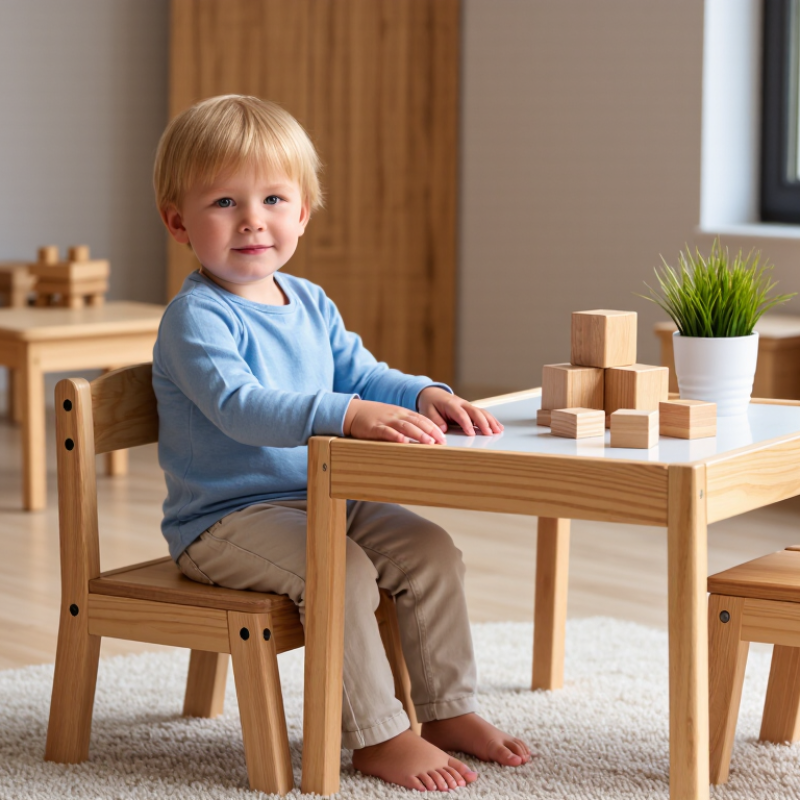
A low chair should fit the child, not just the room. The CDC’s stature-for-age charts place median height around 86–87 cm at age two and 95–96 cm at age three. That rapid change makes adjustability useful, especially when a chair will serve through several growth stages. Check that the child can sit with feet supported and knees comfortably bent. A tall seat can turn a simple snack into a constant climb.
Adjustable chairs can extend their useful life, but moving parts need regular checks. Tighten fittings as directed, and make sure the chair stays steady on your floor. A fixed-height chair is simpler to inspect and move between a table and reading corner. It may also be easier for a young child to use independently. In daily use, look for smooth edges, a manageable weight, and a seat that does not slide when the child shifts.
Safety deserves equal attention. ASTM F2613-22 covers consumer safety requirements for children’s chairs and stools; check whether a chair has been tested to this standard. Still, standards cannot tell you whether a particular seat suits your child’s proportions. That takes observation. Watch how the child gets on and off, reaches the table, and sits after a few minutes. The perfect fit will change. So will your routine.