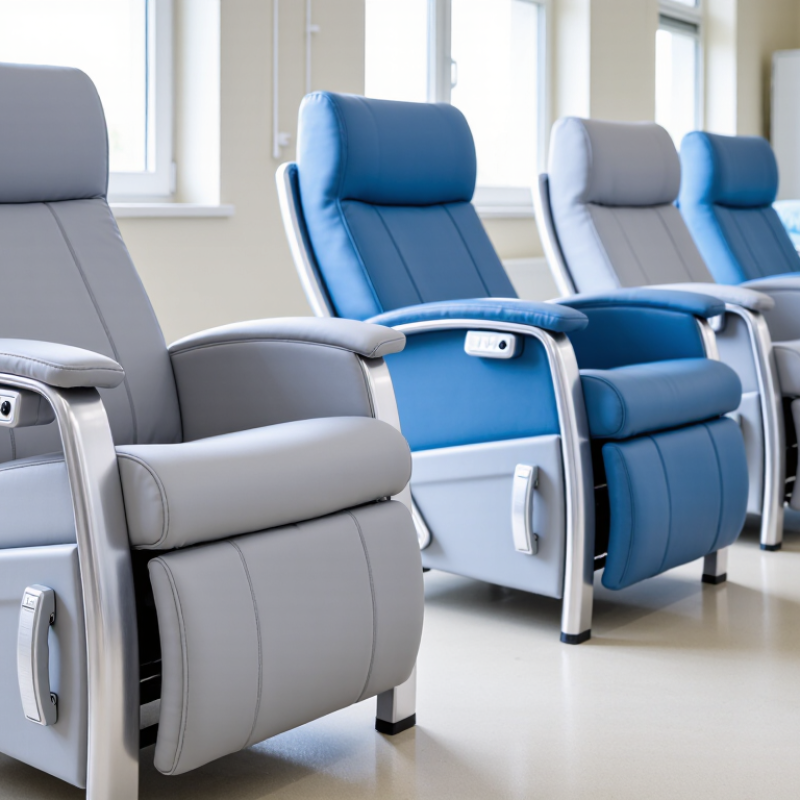
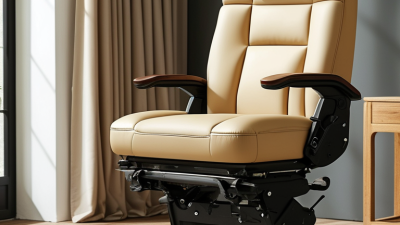
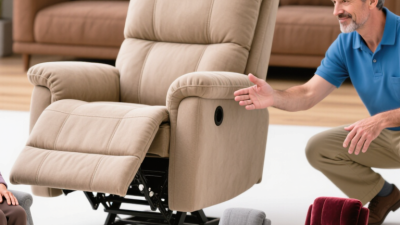
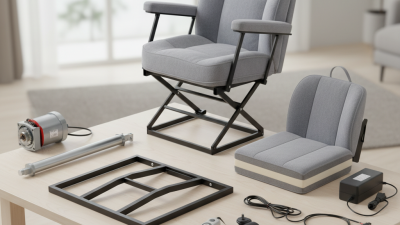
China has become a major sourcing base for medical lift recliners, serving hospitals, rehabilitation centers, senior-care facilities, and home users. Global buyers now expect more than attractive upholstery and competitive prices. They need safe lifting movement, stable frames, washable fabrics, reliable motors, and clear after-sales support.
Demand is closely linked to population ageing and home-based care. The United Nations World Social Report 2023 states that the global population aged 60 and above reached 1.1 billion in 2022. It may reach 1.4 billion by 2030. The World Health Organization also identifies assistive products as important tools for maintaining independence and participation. These findings explain why powered recliners are moving beyond luxury furniture.
Details matter.
A suitable chair should support controlled sitting and standing, especially for users with weak knees or limited balance. Buyers should inspect weight capacity, emergency lowering options, handset design, motor noise, fire-safety documentation, and cleaning performance. For clinical environments, supplier quality systems aligned with ISO 13485:2016 can provide useful evidence, although certification alone does not prove product suitability.
This guide examines leading Chinese manufacturers through a practical purchasing lens. It considers factory experience, customization capability, testing records, export history, warranty terms, and communication quality. Available market studies, including Grand View Research reports on home healthcare and mobility-related equipment, indicate continued growth in care delivered outside traditional hospitals. Forecasts differ. Product quality differs too.
That is the difficult part.
A professional buyer should compare samples, verify documents, and test the complete user experience before placing a large order. The best medical lift recliners are not simply the cheapest models. They are dependable care tools with traceable specifications and realistic service support.
For global buyers, a medical lift recliner is more than a padded chair. It is an electrically powered seating aid designed to support sitting, reclining, and standing. Unlike a standard recliner, its motorized lift mechanism tilts the seat forward and upward. This reduces the deep knee bend required during transfers. A handheld control activates separate movements for the backrest and footrest. Some models use dual motors for more precise positioning.
The mechanism works through synchronized actuators beneath the seat frame. When the user presses “lift,” the seat rises gradually while the backrest returns toward an upright position. During recline, the backrest and leg rest extend to distribute body weight.
The CDC reports that one in four adults aged 65 and older falls each year. A lift recliner cannot eliminate falls, but it may reduce strain during routine transfers. That distinction matters.
The World Health Organization’s World Report on Ageing and Health notes that the global population aged 60 and above may reach 2.1 billion by 2050. Demand for safer home seating will likely grow.
Buyers should check seat width, maximum user weight, motor noise, emergency lowering, upholstery cleanability, and electrical documentation. Real-world fit matters most. A chair can look medical yet feel unstable for a short user. That is an easy mistake. Product testing with caregivers and users remains more reliable than specifications alone.
China Top Medical Lift Recliners for Global Buyers?
Key Features of China-Made Medical Lift Recliners
China-made medical lift recliners often combine powered positioning, reinforced frames, and practical upholstery. A quiet motor can raise the seat gradually, helping users stand with less knee strain. The backrest and leg rest should move independently for clearer comfort control. Some models also offer a full-lift position for assisted transfers. Smooth movement matters more than speed.
Durable materials support daily use in clinics, recovery rooms, and private homes. Look for high-density foam, wipe-clean fabric, and sealed seams around the cushion edges. A steel or reinforced wood frame can improve stability under repeated loading. Buyers should check the tested weight capacity, not rely on appearance. Remote controls need large buttons, clear symbols, and a reachable cord. Small details matter.
Safety evidence deserves careful attention. Reliable suppliers should provide electrical test reports, user manuals, inspection records, and traceable production information. Buyers must still confirm the requirements of their destination market. One certificate may not cover every region. That point is often overlooked. Ask about emergency lowering, anti-tip design, motor noise, and backup operation during power loss. Product photos can hide weak stitching or limited lifting range, so sample inspection remains valuable. No recliner fits every patient. Seat width, transfer height, cleaning routines, and caregiver habits should guide the final choice.
When evaluating medical lift recliners, inspect the frame, motor, fabric, and control system together. A strong steel base should remain stable during lifting and reclining. Test the chair on a firm, level floor. Listen for grinding, sudden stops, or uneven movement. These details often reveal poor assembly. Ask for load testing records, electrical certifications, user manuals, and traceable quality inspections. Requirements differ between countries, so local compliance must be verified before purchase.
Safety should feel predictable, not impressive for one showroom demonstration. Check the emergency battery function, cable protection, anti-tip design, and hand-control response. The lift angle should support standing without pushing the user forward too quickly. Comfort also needs measurement. Seat depth, armrest height, lumbar support, and footrest length should match the intended user. A soft cushion is not always better; excessive sinking can make transfers harder. No chair fits everyone. During evaluation, I would still question whether a standard size suits shorter users.
Tips: Sit for at least fifteen minutes. Try standing without assistance. Check pressure behind the knees. Test every button slowly. Ask how replacement parts are supplied. Review cleaning instructions, warranty limits, and service response times. A quiet motor matters at night. Small gaps around moving parts matter too. Suppliers should provide honest limitations, not only attractive photographs.
China’s lift recliner industry serves hospitals, care homes, distributors, and home-care users worldwide. China’s National Bureau of Statistics reported 296.97 million people aged 60 or above in 2023. This supports continued demand for safer seating and assisted standing. The World Health Organization expects the global population aged 60 and above to reach 1.4 billion by 2030.
Leading Chinese manufacturers usually offer OEM and ODM production. Their product categories include single-motor lift chairs, dual-motor recliners, three-motor models, bariatric chairs, and compact home-care versions. Dual-motor designs adjust the backrest and footrest independently. Bariatric models require careful checking of frame strength, seat width, and actuator capacity. Some factories also provide heat, vibration massage, USB charging, and battery backup. These features improve comfort, but they do not automatically prove clinical value.
Buyer experience matters.
Tips: Request load-test records, electrical safety reports, fire-retardant specifications, and service-part lists. Check whether the supplier follows ISO 13485 or an applicable quality system. Confirm the product’s classification before making medical claims in your market. Trade data and market studies from Grand View Research indicate continued growth in home healthcare equipment, yet lift recliner figures vary by definition. That inconsistency deserves attention. A low quotation may hide weaker motors, thin padding, or limited after-sales support. A sample inspection can reveal more than a polished catalogue.
China Top Medical Lift Recliners for Global Buyers?
Global sourcing requires more than comparing factory prices. The WHO and UNICEF Global Report on Assistive Technology estimates that 2.5 billion people need assistive products today. This figure may exceed 3.5 billion by 2050. Lift recliners support transfers, positioning, and daily independence. However, each market may classify them differently. Buyers should confirm whether the product is furniture, an assistive product, or a medical device. Product claims can change compliance duties.
Request technical files before approving samples. These should include motor specifications, load testing, electrical safety evidence, risk assessments, and user instructions. ISO 14971 supports medical-device risk management, while IEC 60601-1 may apply to certain medical electrical equipment. Do not assume either standard automatically applies. Check the destination market’s rules with a qualified compliance professional. EU buyers should review MDR obligations when medical claims are involved. US buyers should verify FDA requirements based on intended use and labeling. Factory audits should inspect wiring, emergency lowering, upholstery flammability, and final testing records. A polished sample can still hide inconsistent production.
Tips: Define the user’s weight, transfer needs, voltage, plug type, and cleaning routine. Ask for batch-level inspection photos. Keep approved samples sealed. Recheck them after any motor or controller change. The checklist may still miss real-world failures, so collect feedback from caregivers and users after delivery.
| Sourcing & Compliance Dimension | What Global Buyers Should Verify | Applicable Standard, Regulation or Market Rule | Required Evidence | Recommended Buyer Acceptance Gate |
|---|---|---|---|---|
| Product classification | Confirm whether the lift recliner is marketed as general furniture, an assistive product, or a medical device. Classification depends on intended use, claims, design and the destination market. | Medical-device rules are jurisdiction-specific. In the European Union, classification is determined under Regulation (EU) 2017/745 when the product falls within the medical-device definition. In the United States, classification depends on intended use and applicable FDA requirements. | Intended-use statement, product claims, risk classification rationale, regulatory pathway and market-specific regulatory assessment. | No purchase order until the buyer, importer and regulatory representative agree on the product classification and claims. |
| Quality management system | Assess whether the manufacturing site controls design changes, purchasing, production, traceability, complaints, nonconformities and corrective actions. | ISO 13485:2016 is the internationally recognized quality-management standard for medical devices. U.S. manufacturers and certain suppliers are subject to FDA Quality Management System Regulation requirements, including the effective framework from February 2, 2026. | Valid certificate where applicable, certificate scope, recent audit report or audit summary, document-control procedure and corrective-action records. | Verify certificate authenticity, scope and site address; perform a remote or on-site audit for higher-risk products. |
| Electrical safety | Check the motor, control handset, power supply, wiring, earthing, insulation, overload protection and operation under the destination market’s voltage and frequency. | IEC 60601-1 may apply when the product is medical electrical equipment. If the product is not a medical device, household or furniture-related electrical safety requirements may apply instead, depending on the market. | Test report from a competent laboratory, electrical schematic, component list, power-input specification and production end-of-line test record. | Approve only the tested configuration, including motor, adapter, controller, cable, plug and software or firmware version where applicable. |
| Risk management | Identify hazards such as entrapment, unexpected movement, tipping, overload, pinch points, electrical shock, overheating, upholstery ignition and misuse during transfers. | ISO 14971:2019 provides the recognized framework for medical-device risk management. Additional furniture, electrical and flammability rules may apply by destination and intended use. | Risk-management plan, hazard analysis, risk-control verification, residual-risk evaluation and usability or misuse assessment. | Require documented risk controls for every identified high-severity hazard before mass production. |
| Mechanical performance | Verify safe working load, recline and lift-cycle performance, frame strength, stability, caster or footrest performance, noise and durability. | Use applicable furniture, assistive-product or medical-device test methods identified for the destination market. The correct test load and cycle count must be defined in the approved specification. | Approved engineering drawings, load and cycle-test reports, stability results, dimensional inspection records and sample-retention procedure. | Set measurable limits for load, cycles, noise, tilt, gap dimensions and dimensional tolerances in the purchase specification. |
| Biocompatibility and materials | Evaluate materials that may contact skin, including upholstery, foam, coatings, adhesives, handles and control surfaces, especially for prolonged contact. | ISO 10993 evaluation principles may be relevant when the product or its materials are within medical-device scope. EU REACH and other chemical restrictions may apply to products placed on the European market. | Material declarations, supplier declarations, restricted-substance test reports, safety data sheets and biocompatibility evaluation where required. | Approve only materials listed in the controlled bill of materials; require written authorization for substitutions. |
| Environmental compliance | Confirm restrictions on hazardous substances, packaging materials, batteries and electrical or electronic components for each destination. | EU RoHS Directive 2011/65/EU may restrict hazardous substances in electrical and electronic equipment. EU REACH, packaging rules and waste-related obligations may also apply depending on the product configuration. | RoHS test report or technical documentation, REACH substance declaration, packaging material declaration and battery documentation where applicable. | Complete a destination-market compliance checklist before shipment and retain supporting records for the legally required period. |
| Labeling and instructions | Ensure labels and manuals cover intended use, contraindications, warnings, safe operating steps, cleaning, maintenance, emergency lowering and disposal. | EU medical devices require applicable labeling and instructions under Regulation (EU) 2017/745. U.S. requirements may include applicable FDA labeling, UDI and registration obligations depending on classification. | Controlled artwork, translated instructions, label proofs, symbols review, traceability information and packaging inspection checklist. | Approve the final multilingual artwork before production; prohibit unapproved translations or marketing claims. |
| Supplier and component control | Map critical components such as motors, actuators, controllers, power supplies, fasteners, foam, upholstery and structural parts to qualified suppliers. | ISO 13485 and regulated-market quality systems require controlled purchasing and supplier evaluation when applicable. | Approved supplier list, component specifications, incoming inspection plan, certificates of conformity and change-notification procedure. | Treat changes to critical components as requiring documented review, re-testing and buyer approval before implementation. |
| Factory inspection and shipment release | Use staged inspections: pre-production review, first-article approval, in-process inspection, final random inspection and container-loading verification. | Inspection frequency and sampling should be defined contractually. ANSI/ASQ Z1.4 is commonly used as an attribute-sampling reference, but it does not replace product-specific safety testing. | Inspection plan, sampling level, defect classification, measurement records, photographs, test videos and signed release report. | Release shipment only after critical defects are zero, major defects meet the agreed limit and all required documents are complete. |
| Post-market surveillance | Plan for complaint handling, incident reporting, warranty analysis, field corrections, spare parts and preventive safety actions. | Medical-device markets generally require post-market controls, with specific reporting and corrective-action duties varying by jurisdiction and product classification. | Complaint log, trend reports, service records, incident-assessment procedure, recall or field-action plan and spare-parts records. | Define response times, escalation contacts, data ownership and corrective-action responsibilities in the supply agreement. |