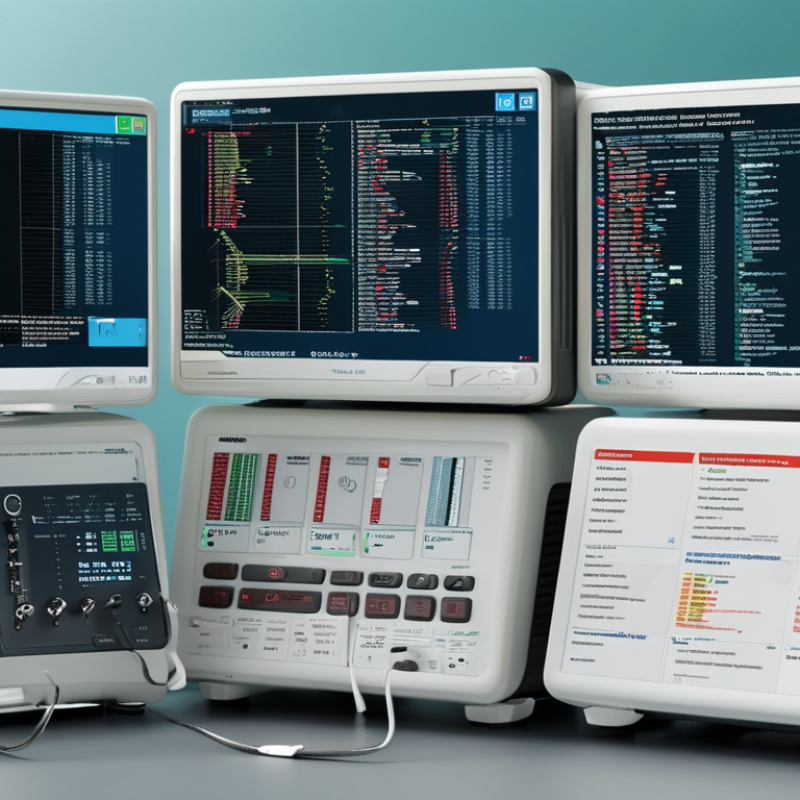
| Multiparameter Patient Monitor |
Continuous monitoring in hospitals, emergency departments, operating rooms, and intensive care units. |
ECG leads; heart rate; non-invasive blood pressure; SpO₂; temperature; respiratory rate; optional invasive pressure and carbon dioxide modules; screen size; alarm management; data export. |
12-lead ECG support on advanced models; SpO₂ measurement generally 70–100%; non-invasive blood pressure cycle settings from manual readings to short automatic intervals; rechargeable battery commonly supports several hours of operation. |
IEC 60601-1; IEC 60601-1-2; IEC 60601-2-27 for electrocardiographic monitoring; IEC 60601-2-49 for multifunction patient monitors. |
Check measurement accuracy, alarm priority levels, electrical safety, accessories supplied, battery replacement method, local language support, service calibration, and compatibility with hospital information systems. |
| Electrocardiograph |
Resting ECG recording, cardiac screening, preoperative assessment, and diagnostic cardiology. |
12-lead acquisition; sampling rate; frequency response; paper or thermal printer; display; interpretation software; internal memory; USB or network export. |
Sampling rates of 500 samples per second or higher are commonly used; standard diagnostic ECG bandwidth is approximately 0.05–150 Hz; typical recording speed is 25 or 50 mm/s. |
IEC 60601-1; IEC 60601-1-2; IEC 60601-2-25 for electrocardiographs; local medical-device registration requirements. |
Verify signal quality, lead-off detection, calibration, paper availability, export format, interpretation limitations, and whether the device supports the required power frequency and plug type. |
| Non-Invasive Ventilator |
Respiratory support using a mask or nasal interface for selected patients with spontaneous breathing. |
CPAP and bilevel modes; inspiratory and expiratory pressure ranges; oxygen concentration control; leak compensation; respiratory rate; ramp function; humidification; data recording. |
Pressure settings commonly cover approximately 4–25 cmH₂O for non-invasive applications; adjustable backup rates and oxygen blending may be available on clinical models. |
IEC 60601-1; IEC 60601-1-2; ISO 80601-2-70 for sleep-apnea breathing therapy equipment or ISO 80601-2-12 for critical-care ventilators, as applicable. |
Confirm intended patient population, mask compatibility, oxygen inlet requirements, alarm functions, circuit availability, cleaning procedures, and performance during power interruption. |
| Critical-Care Ventilator |
Invasive and non-invasive respiratory support in intensive care and emergency settings. |
Volume-controlled and pressure-controlled ventilation; tidal volume range; inspiratory pressure; PEEP; FiO₂; respiratory rate; flow triggering; apnea backup; waveform display; humidification compatibility. |
Adult tidal-volume settings commonly begin around 100 mL and extend above 1,000 mL, depending on model; FiO₂ adjustment generally ranges from 21% to 100%; PEEP may extend beyond 20 cmH₂O. |
IEC 60601-1; IEC 60601-1-2; ISO 80601-2-12; applicable national ventilator regulations and gas-supply requirements. |
Evaluate delivered-volume accuracy, alarm completeness, oxygen and air supply compatibility, battery runtime, expiratory filtration, circuit cost, preventive maintenance, and training requirements. |
| Infusion Pump |
Controlled delivery of fluids, medication, nutrition, and blood products. |
Flow-rate range; dose calculation; occlusion pressure; bolus function; air-in-line detection; anti-free-flow protection; drug library; compatible administration sets; battery capacity. |
Many volumetric pumps provide rates from approximately 0.1 to 1,200 mL/h; typical stated flow accuracy is around ±5%, subject to set type, fluid, rate, and operating conditions. |
IEC 60601-1; IEC 60601-1-2; IEC 60601-2-24 for infusion pumps and controllers; applicable infusion-device requirements in the destination market. |
Request accuracy test results, occlusion response data, alarm audibility, drug-library update process, administration-set availability, cybersecurity controls, and total cost of ownership. |
| Syringe Pump |
Low-volume and high-precision medication delivery in neonatal, pediatric, anesthesia, and intensive-care settings. |
Syringe sizes; flow-rate range; bolus control; occlusion alarm; near-empty detection; anti-siphon mechanism; drug library; battery operation. |
Typical flow ranges extend from about 0.1 to 1,500 mL/h, depending on syringe size and model; accuracy is commonly specified near ±2% to ±5% under defined test conditions. |
IEC 60601-1; IEC 60601-1-2; IEC 60601-2-24; compatible syringe specifications and local safety requirements. |
Confirm approved syringe types, low-flow performance, startup delay, occlusion pressure, battery replacement, alarm history, and availability of validated consumables. |
| Ultrasound Imaging System |
General imaging, obstetrics, cardiology, vascular studies, emergency assessment, and point-of-care diagnosis. |
Transducer types; frequency range; imaging modes; Doppler capability; display size; frame rate; storage; DICOM connectivity; probe disinfection compatibility. |
General-purpose probes commonly operate within approximately 2–15 MHz; higher frequencies provide greater superficial detail, while lower frequencies provide greater penetration. |
IEC 60601-1; IEC 60601-1-2; IEC 60601-2-37 for ultrasonic medical diagnostic and monitoring equipment; DICOM compatibility where required. |
Assess image quality using clinical test objects, probe durability, thermal and mechanical index display, serviceability, data export, software licensing, and replacement-probe cost. |
| Portable Oxygen Concentrator |
Supplemental oxygen for home care, transport, ambulatory use, and locations without centralized oxygen supply. |
Continuous-flow or pulse-dose delivery; oxygen concentration; flow settings; battery capacity; noise level; weight; altitude range; alarm functions. |
Stationary units commonly provide approximately 1–10 L/min continuous flow; oxygen concentration is often specified at 90% or higher at rated conditions, depending on model and flow rate. |
ISO 80601-2-69; IEC 60601-1; IEC 60601-1-2; transport and battery requirements applicable to the destination market. |
Verify oxygen concentration at each flow setting, battery endurance, recharge time, sieve-bed replacement interval, noise, service access, and suitability for the prescribed delivery mode. |
| Suction Unit |
Removal of secretions and fluids in emergency care, operating rooms, ambulances, dental care, and home care. |
Maximum vacuum; free-air flow; collection-container capacity; bacterial filter; overflow protection; battery operation; tubing and catheter compatibility. |
Portable units commonly provide approximately 15–30 L/min free-air flow and adjustable vacuum from roughly 0 to −600 mmHg, depending on application. |
ISO 10079-1 for electrically powered medical suction equipment; IEC 60601-1; applicable infection-control requirements. |
Check vacuum stability, flow under load, jar sealing, filter replacement, cleaning and disinfection procedures, noise level, battery duration, and spill protection. |
| Steam Sterilizer |
Sterilization of heat- and moisture-resistant instruments, glassware, and selected medical supplies. |
Chamber volume; sterilization cycles; temperature; pressure; holding time; drying performance; vacuum capability; water quality; cycle documentation. |
Common saturated-steam cycles use approximately 121°C or 134°C; cycle holding times vary according to load, packaging, and validated sterilization parameters. |
EN 13060 for small steam sterilizers; ISO 17665 for moist-heat sterilization processes; applicable pressure-vessel and electrical-safety rules. |
Confirm chamber loading capacity, air-removal method, validation records, biological and chemical indicator compatibility, water requirements, drying quality, and maintenance intervals. |
| Patient Examination Table |
General examination, minor procedures, outpatient care, and diagnostic consultations. |
Working height; safe working load; backrest adjustment; upholstery material; paper-roll holder; castors; electric or manual adjustment; cleanability. |
Electric models commonly offer height adjustment of approximately 45–95 cm; safe working loads frequently range from 150–250 kg, subject to configuration. |
IEC 60601-1 where electrically powered; ISO 10993 considerations for patient-contact materials; applicable medical furniture and electrical-safety requirements. |
Evaluate stability, pinch-point protection, emergency lowering, upholstery seams, disinfectant resistance, caster locks, transfer access, and replacement-part availability. |
| Hospital Bed |
Inpatient care, recovery, intensive care, long-term care, and patient positioning. |
Back and knee adjustment; height range; safe working load; side rails; castors; emergency CPR release; mattress platform; electrical backup; accessory rails. |
Electric beds commonly provide a low position near 40 cm and a raised position near 80 cm; safe working loads vary widely and must include patient, mattress, and accessories. |
IEC 60601-2-52 for medical beds; IEC 60601-1 for electrically powered equipment; applicable bed-rail and entrapment-safety requirements. |
Check entrapment prevention, emergency lowering, brake performance, cleanability, lifting-column durability, mattress dimensions, battery backup, and service access. |
| Personal Protective Equipment |
Protection against biological, chemical, and particulate hazards in clinical and laboratory environments. |
Protection level; filtration performance; fluid resistance; fit; size range; material; seam construction; breathability; donning and disposal instructions. |
Respirators are selected by certified filtration class and fit; medical masks are evaluated for bacterial filtration, differential pressure, splash resistance, and microbial cleanliness according to the applicable standard. |
ISO 13688 for protective clothing; EN 14683 for medical face masks; EN 149 or equivalent approved respirator standards; ASTM or local requirements where applicable. |
Request independent test reports, lot traceability, sizing data, material declarations, packaging integrity, shelf life, and evidence that claims match the destination-market regulation. |
| Disposable Syringes and Needles |
Injection, medication preparation, vaccination, sample collection, and fluid transfer. |
Nominal volume; graduation readability; luer connection; needle gauge and length; dead space; sterility; packaging; latex status; single-use labeling. |
Common syringe sizes include 1, 3, 5, 10, 20, and 50/60 mL; needle gauges commonly range from approximately 18G to 30G, depending on clinical use. |
ISO 7886-1 for sterile single-use syringes; ISO 7864 for sterile hypodermic needles; ISO 10993 for biological evaluation where applicable. |
Verify sterility method, expiration date, graduation accuracy, connection security, needle sharpness, package seal integrity, lot documentation, and disposal compatibility. |
| In-Vitro Diagnostic Analyzer |
Blood chemistry, hematology, immunoassay, coagulation, or infectious-disease testing in laboratories and clinical settings. |
Test menu; sample volume; throughput; detection method; calibration; quality-control system; turnaround time; reagent storage; connectivity; waste handling. |
Performance depends on the assay; buyers should compare precision, analytical sensitivity, reportable range, carryover, throughput, and invalid-result rate using validated data. |
ISO 13485; ISO 14971; ISO 15189 for medical laboratories; applicable in-vitro diagnostic regulations and assay-specific performance requirements. |
Assess reagent availability, calibration frequency, quality-control materials, open or closed reagent design, cybersecurity, data interoperability, operator training, and service response time. |