Why Choose UVC Sterilization for Your Business?
Businesses are rethinking hygiene as customers expect cleaner, safer, and more transparent environments. Uvc Sterilization can support that effort by using short-wave ultraviolet light to reduce microorganisms on exposed surfaces, air, and selected equipment. It offers a chemical-free treatment option for carefully controlled applications.
The value depends on more than installing a lamp. Effective performance requires the correct wavelength, exposure time, distance, and light intensity. Surface design matters too. Dust, moisture, and shadows can block ultraviolet energy. A trained team should assess these conditions, follow manufacturer instructions, and maintain clear operating records. Independent testing can also confirm whether the system performs as intended.
It is not a magic wand. That assumption deserves challenge. UVC cannot replace cleaning, hand hygiene, ventilation, or responsible workplace procedures. It may also create safety risks if people or animals are exposed during operation. Businesses should use shielding, interlocks, warning labels, and documented controls where appropriate. These details can seem slow, especially during busy shifts. They are still essential.
When selected carefully, Uvc Sterilization may improve process consistency and reduce dependence on repeated chemical applications. Its strongest advantage is measurable control. Managers can track maintenance, exposure cycles, and verification results. However, every facility is different. A small clinic, food-processing area, hotel room, and warehouse need separate assessments. Choosing this technology should involve practical experience, qualified advice, and honest review of its limits. That balance builds credibility and protects the people a business serves.
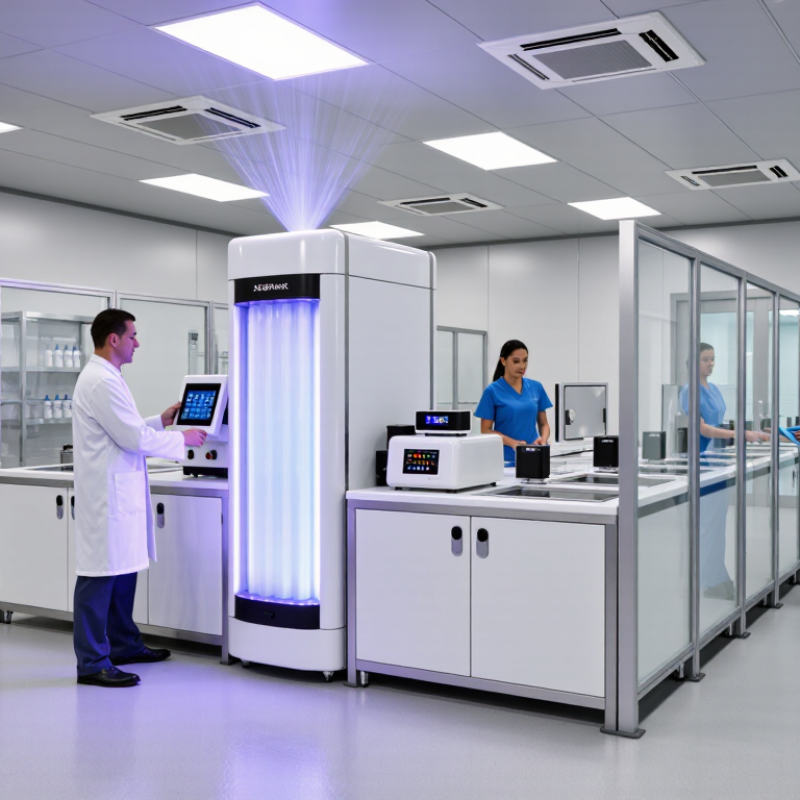
UVC at 200–280 nm: The Industry-Defined Germicidal Spectrum
Why Choose UVC Sterilization for Your Business?
UVC between 200 and 280 nanometers is widely recognized as the germicidal spectrum. This range damages microbial DNA and RNA, limiting replication. The CIE 155:2003 report identifies strong germicidal activity near 260–265 nm. Low-pressure UVC sources commonly operate near 254 nm. That wavelength remains highly effective.
The details matter.
Dose depends on irradiance, exposure time, distance, and surface condition. The International Ultraviolet Association notes that shadows, dust, and uneven airflow can reduce real-world performance. A clean, direct path works best. Shorter distances usually deliver higher intensity. Field commissioning often reveals this gap.
UVC is not a magic switch.
ASHRAE Handbook—HVAC Applications, 2023, describes ultraviolet germicidal systems as engineering controls that require correct design, installation, and maintenance. Businesses should verify lamp output with calibrated instruments and document operating hours. They should also control human exposure through shielding, interlocks, and access procedures. The U.S. Food and Drug Administration warns that direct UVC exposure can injure skin and eyes. The wavelength is powerful, but performance still depends on the room. A pilot test may expose unexpected shadows, airflow weaknesses, or cleaning problems. That is useful evidence, not failure.
How 254 nm UVC Damages Microbial DNA and RNA
Why Choose UVC Sterilization for Your Business?
At 254 nm, UVC energy reaches microbial DNA and RNA. These molecules absorb ultraviolet photons strongly. The energy creates pyrimidine dimers, especially thymine dimers in DNA. RNA can also develop uracil-related photochemical damage. These defects interrupt replication and protein production. The microorganism may remain physically present, but it cannot reproduce effectively.
The International Ultraviolet Association identifies 253.7 nm emissions as highly effective for germicidal applications. The U.S. EPA UV Disinfection Guidance Manual requires dose validation under different flow rates, lamp ages, and water qualities. There is no universal dose. That detail matters. A clean surface may receive enough energy, while dust or shadowed areas receive very little.
ASHRAE’s 2023 HVAC Applications guidance also links UVC performance to irradiance, exposure time, airflow, and equipment design. In practical use, operators should monitor lamp output and clean protective sleeves. A weak lamp is easy to miss. I have seen specifications focus on wavelength while ignoring blocked surfaces and maintenance intervals. That is an incomplete evaluation. UVC can support safer air and surface treatment, but only validated systems deserve strong performance claims.
3-Log and 4-Log Reductions: Measuring Commercial UVC Efficacy
Why Choose UVC Sterilization for Your Business?
A 3-log reduction removes 99.9% of targeted microorganisms. A 4-log reduction removes 99.99%. That difference sounds small, but it matters in high-volume facilities. For example, one million organisms become 1,000 after a 3-log treatment. A 4-log treatment leaves about 100. The International Ultraviolet Association identifies delivered dose, exposure time, and wavelength as core factors in UVC performance.
The numbers matter. UVC systems must deliver the required dose across every treatment zone. Dusty coils, uneven airflow, and equipment shadows can reduce exposure. The U.S. CDC’s Environmental Infection Control guidance presents ultraviolet germicidal irradiation as a supplemental control, not a replacement for cleaning or filtration. ASHRAE guidance also emphasizes airflow design, maintenance, and verified irradiance.
Commercial buyers should request a commissioning report, not only a marketing claim. It should show measured irradiance, exposure time, target organisms, and the expected log reduction. Operators should also inspect lamps, sensors, and surfaces regularly. A 4-log rating may describe laboratory conditions, while a busy production room performs differently. That gap deserves attention. It is not magic. Better monitoring can reveal weak zones before they become costly problems. Periodic testing, documented maintenance, and trained staff make UVC efficacy more credible and safer for daily operations.
Safety Standards: Applying ISO 15858 and ICNIRP Exposure Limits
Why Choose UVC Sterilization for Your Business?
UVC systems can support microbial control when designed and operated responsibly. Safety must guide the purchase, installation, and daily use. ISO 15858 provides important safety information for UVC devices, including warnings, controls, and user instructions. It should not be treated as a substitute for a site-specific risk assessment.
ICNIRP exposure limits help define acceptable ultraviolet exposure for skin and eyes. The limits depend on wavelength, intensity, and exposure time. A qualified professional should measure irradiance at occupied locations. A UVC chamber may need interlocks, door switches, shielding, warning labels, and occupancy sensors. Air systems also require careful airflow planning. Some wavelengths can generate ozone, so ventilation and monitoring may be necessary.
Small details matter.
A realistic installation includes documented measurements, maintenance records, and staff training. Operators should know what happens when a sensor fails or a door opens unexpectedly. Maintenance workers need controlled procedures, not informal assumptions. In practice, teams sometimes trust factory settings too much. That is a weakness worth correcting. Dust, aging lamps, reflective surfaces, and altered room layouts can change exposure levels. Periodic verification is therefore essential. A system that performs well in a test room may behave differently beside metal equipment or glass panels. Safety claims should be supported by current technical records and competent review, rather than attractive marketing language.
Why Choose UVC Sterilization for Your Business?
Safety Standards: Applying ISO 15858 and ICNIRP Exposure Limits
The chart highlights commonly referenced UVC wavelengths used in sterilization and safety planning. UVC is generally defined as 200–280 nm, with 254 nm mercury lamps and approximately 265 nm representing important germicidal reference points. ISO 15858 provides safety information and engineering guidance for UVC devices, while ICNIRP recommends limiting effective ultraviolet exposure to 30 J/m² over an eight-hour period at 270 nm. In practice, businesses should use shielding, interlocks, warning labels, access controls, and exposure measurements to keep personnel within applicable limits.

